

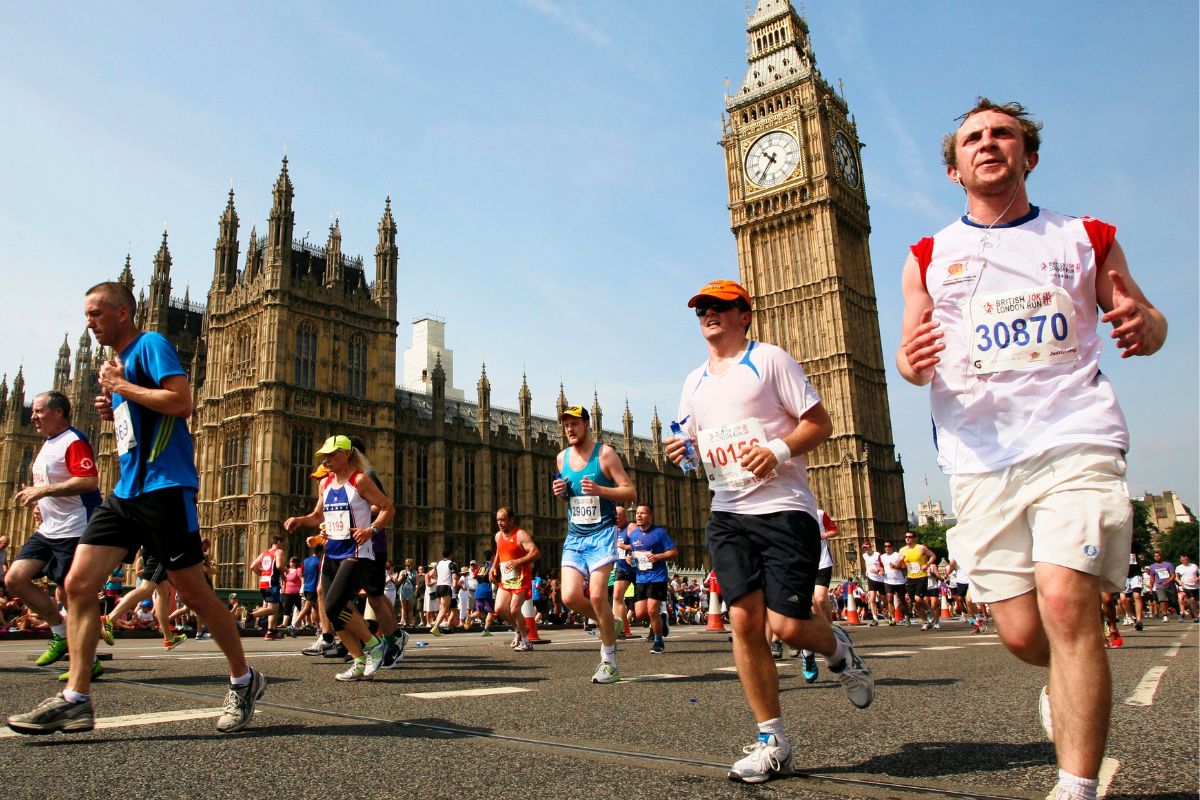
Marathons have skyrocketed in popularity in recent decades, with there being just 55 finishers in the 1970 New York marathon, rising to 50,773 in 2017[1]. With this comes a lot of issues, the biggest of these being overuse injuries such as ‘runners knee’ a.k.a Patellofemoral Pain Syndrome, shin splints and Achilles tendinopathy. More often than not, these injuries come from training error, such as ramping up the mileage too quickly or biomechanical imbalances.
How Does Strength Training Actually Help?
1
Reduce Shin Splints
By increasing bone mineral density through strength training, this allows the tibial bone of the shin to endure more repetitive and impactful stress, which is what causes shin splints. This allows your shock absorbing ability to increase dramatically.
2
Decrease Knee and Ankle Tendon Injuries
Injuries such as runners knee and Achilles tendinopathies are almost always due to working the tendons beyond their strength capacity. Similar to bone splints. Therefore strengthening these major tendons through heavy loads consistently, then allows the tissues to withstand more work put on then throughout your running, especially when upping the mileage.
3
Running Mechanics
Due to the nature of running, the core is integral to reducing energy wastage, by building a more stable core, it can decrease trunk rotation and aid in keeping your chest upright. Also, by strengthening your posterior chain (glutes, hamstrings and calves) you can then propel yourself further with less effort, making your running more efficient.
What Do the Studies Say?
A study performed in 2019 concluded that minor injuries such as Achilles tendinopathy and knee pain were the main cause of people not completing marathons. Therefore, raising the question of whether strength training would be a viable way of reducing this.
This was done by comparing two groups, one that did not partake in strength training and one group that did. 83.9% of participants who did zero strength training completed the marathon. Whereas 85.3% of the strength training group did. This may seem like a small difference, however, when you look at the number of people who ran the London Marathon in 2026, 59,830, that would work out as 9,000 people being able to complete a marathon, solely due to partaking in strength training twice per week.
When specifically looking at the strength training group further, it showed that the participants who were compliant with two sessions per week had a 7% better chance of finishing the marathon and a 15% less chance of having an injury than those who didn’t [2].
References
- Finisher Demographics | TCS New York City Marathon. 2017. https://www.tcsnycmarathon.org/about-the-race/results/finisher-demographics. Accessed July 15, 2018
- Toresdahl BG, McElheny K, Metzl J, Ammerman B, Chang B, Kinderknecht J. A Randomized Study of a Strength Training Program to Prevent Injuries in Runners of the New York City Marathon. Sports Health: A Multidisciplinary Approach [Internet]. 2019 Oct 23;12(1):74–9. Available from: https://doi.org/10.1177%2F1941738119877180
