

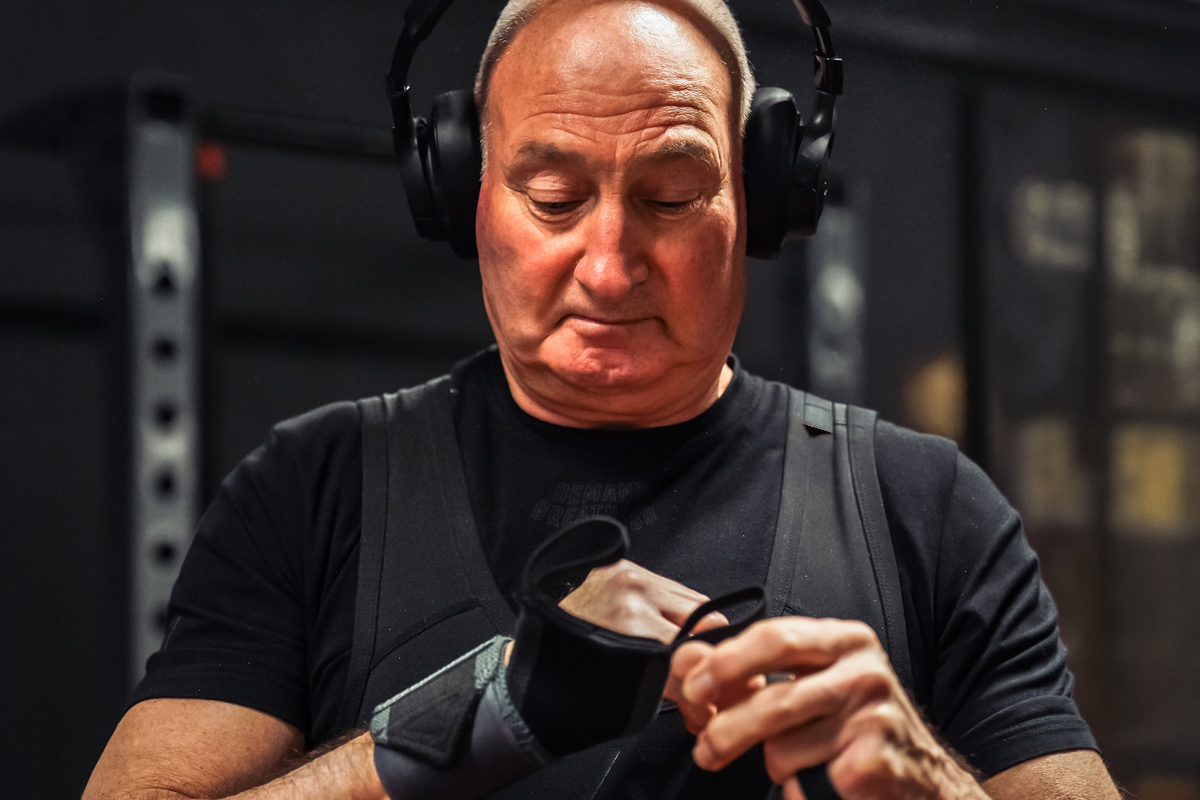
Research on this topic is varied with some findings suggesting that music can increase performance when resistance training, however, some showing there to be no physiological difference at all.
Studies that HAVE shown an increase in performance
In 20201 a study stated how listening to self selected music improved grip strength and strength endurance performance during a lat pull down. Which was achieved by a reported decrease in RPE (rate of perceived exertion). This was achieved by measuring each participant’s grip strength and their strength endurance whilst performing the lat pull down exercise listening to either their own preferred music, no music at all, or their non preferred music. On almost all accounts the grip strength and muscular endurance increased when listening to a preferred music genre. With the amount of reps being completed with preferred music being increased on average by two reps.
This is further backed by a study in 20182 stating that listening to preferred music increased bar velocity and repetitions when performing the bench press within twelve resistance trained college aged males. Finding an increase in motivation when listening to preferred music to non-preffered. One limitation of this study is that 92% of all participants chose the same genre of music, Rap/Hip-Hop, similarly with the non-preffered music being 83% country music. Therefore insinuating that there is knowledge if the genre itself can make any difference when resistance training.
Studies that HAVE NOT shown an increase in performance
There have been studies that oppose this idea, also in 20183 a study looking into music genre and its influence on explosive power. With the study claiming that listening to music has no influence on explosive power and velocity production when performing the squat and bench press. Each participant’s heart rate and RPE were measured after every completion of a set and showed no significant improvement with, or without, music. With it even seen to be a disadvantage in some instances. One thing this study determined was that music improved positive mood, across every music genre, demonstrating that despite there being no found physical differences when training, people’s moods were lifted during the process.
What tunes should I be playing to hit my next PB?
When listening to music to improve performance, tempo is key. When comparing different beats per minute (BPM) in songs they were placed in three categories when researched in 20204.
- Low (90-110 BPM)
- Med (130-150 BPM)
- High (170-190 BPM)
Heavy resistance training was performed in four groups, with the fourth being no music. The results showed a slight decrease in RPE when listening to music in the ‘high’ category by 6.5%, using the Borgs Scale. Some songs that fall into this high BPM category consist of the following:
- Lose Yourself – Eminem (171 BPM)
- Blinding Lights – The Weekend (171 BPM)
- Foot Loose – Kenny Loggins (174 BPM)
- Bye Bye Bye – NSYNC (173 BPM)
This shows that when training and you are listening to music, then songs with higher BPM’s are going to motivate you slightly more than any other tempo. However in regards to whether music itself dramatically increases your performance, there is yet to be a definitive answer without any contradicting opinions within research.
Putting the research to one side, clearly the best tracks to listen to in the gym (and my personal favourites):
- Flashing Lights – Kanye West
- Massive – Drake
- White Noise – Disclosure
- All of the Lights – Kanye West
- Feel Good Inc. – Gorrilaz
References
- Silva NR dos S, Rizardi FG, Fujita RA, Villalba MM, Gomes MM. Preferred Music Genre Benefits During Strength Tests: Increased Maximal Strength and Strength-Endurance and Reduced Perceived Exertion. Perceptual and Motor Skills. 2020 Jul 28;128(1):324–37.
- Ballmann CG, McCullum MJ, Rogers RR, Marshall MM, Williams TD. Effects of Preferred vs. Nonpreferred Music on Resistance Exercise Performance. Journal of Strength and Conditioning Research. 2018 Dec;35(6):
- Moss SL, Enright K, Cushman S. The influence of music genre on explosive power, repetitions to failure and mood responses during resistance exercise. Psychology of Sport and Exercise. 2018 Jul;37:128–38.
- Patania VM, Padulo J, Iuliano E, Ardigò LP, Čular D, Miletić A, et al. The Psychophysiological Effects of Different Tempo Music on Endurance Versus High-Intensity Performances. Frontiers in Psychology [Internet]. 2020 Feb 5;11(74). Available from: https://www.ncbi.nlm.nih.gov/pmc/articles/PMC7013107/
