

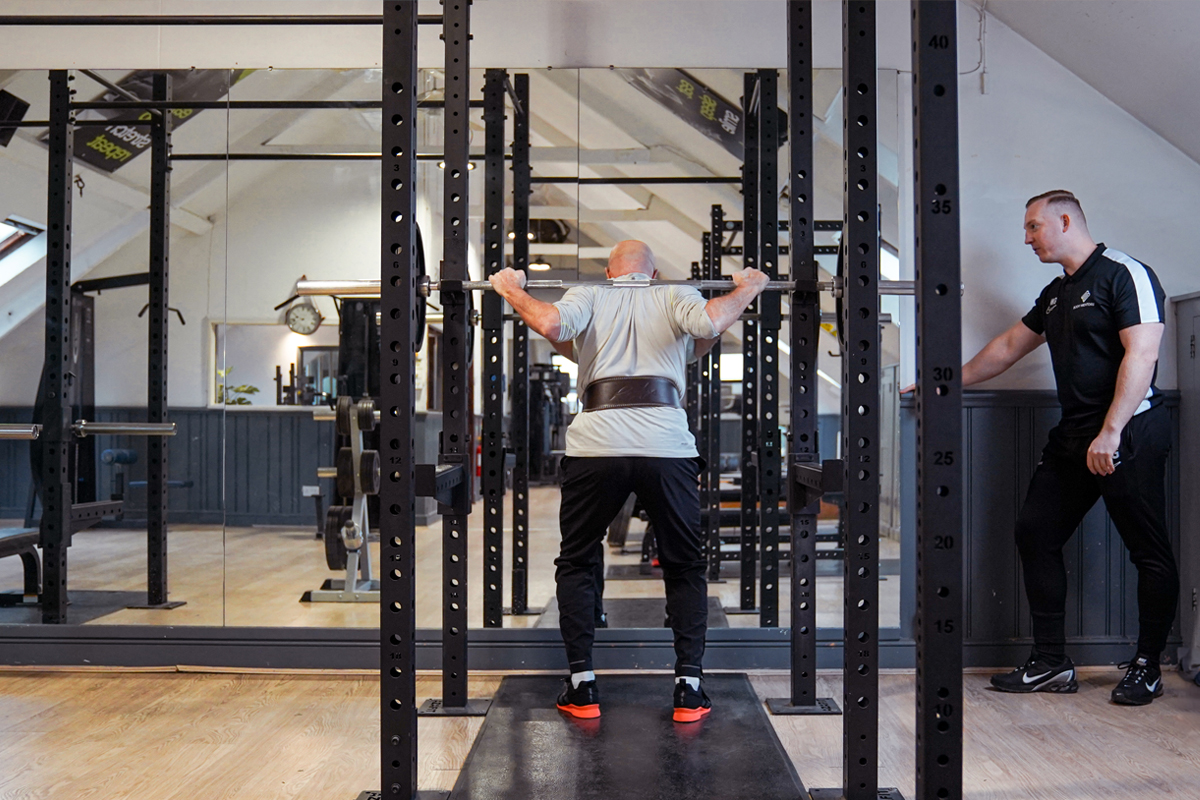
Builds Tougher Muscles, Tendons, and Ligaments
Barbell training is an excellent way to increase muscle mass, as well as improve tendon and ligament integrity. This is achieved through progressive overload — meaning the weight you lift increases each session, whether by 0.5 kilograms or 2.5 kilograms. As long as the weight increases session by session, progressive overload is being applied.
Progressive overload forces the body to adapt to the increased load, causing the muscle and tendon fibers to thicken. This makes them more resilient to stress and better able to withstand forces in previously weak positions or ranges of motion. Over time, the accumulation of these adaptations means your muscles, tendons, and ligaments can handle greater stress. The thickening of these fibers, along with muscle hypertrophy (growth) and increased bone density, all contribute to one key outcome: a significantly reduced risk of injury.
Training Movements Not Muscles
Barbell training consists of compound movements – exercises that engage multiple muscle groups and joints simultaneously. This is due to the nature of barbell movements, which involve muscles and joints working together to perform functional, everyday tasks. For example, a squat trains the same structures that allow you to stand up from a chair. Barbell training enables us to train our bodies and musculoskeletal systems in the way nature intended.
In contrast, training with machines and isolation exercises targets individual muscles, building isolated and often unbalanced strength. This can lead to muscular and joint compensation, which ultimately increases the risk of injury. In reality, our bodies rely on multiple muscles and joints working together – even for simple tasks like bending down to pick something up off the floor – so it makes sense to train them together in the gym.
As mentioned earlier with exercises like the leg extension, our bodies are designed to use muscle groups and joints in conjunction. The same applies to balance. For instance, when standing on one leg, your body recruits multiple muscle groups to stabilize the ankle, knee, and hip joints. Training these structures together – as in a squat – helps build functional strength, which in turn improves balance and coordination.
Simply put, barbell training strengthens muscles in coordination with one another, allowing them to support surrounding joints more effectively. Injuries often occur when there’s a weakness or fatigue in a specific muscle or muscle group. Since barbell training engages multiple muscles in each movement, it allows those muscles to share the load and support one another. Combined with improvements in neuromuscular coordination and proprioception, barbell training stands out as one of the most effective tools for injury prevention.
Valsalva Maneuver
One key component of barbell training used in every lift is the Valsalva maneuver. This involves taking a deep breath through the mouth while bracing the abdominal and back muscles to create intra-abdominal pressure. This technique stabilizes the trunk and creates a more rigid, supportive base during the lift.
The Valsalva maneuver is highly transferable to everyday scenarios — such as moving a sofa, lifting a heavy plant pot, or pushing a loaded wheelbarrow while gardening. These tasks demand significant force, much like barbell training. By using the Valsalva maneuver just before lifting a heavy object, you can enhance trunk and spinal stability, which greatly reduces the risk of injury.
In this way, barbell strength training not only improves your performance in the gym but also makes common, injury-prone daily tasks safer and easier.
Why Trunk Stability Changes Everything
It might come as a surprise to some, but barbell training is a highly effective way to improve spinal stability and strength. This is largely due to the nature of the movements, which require the trunk to remain engaged and stable throughout each lift. Trunk engagement is a crucial component – not only does it help maintain overall body stability, but it also provides essential support to the lower back. This is especially important in movements like the deadlift and overhead press.
So, while trunk strength and stability are fundamental to barbell training, they also play a key role in injury prevention – both inside and outside the gym. A strong trunk offers added support to the spine and pelvis, making them less susceptible to injury. When combined with the functional strength developed through barbell training, you may start to notice a reduction in common aches and pains, and everyday movements will feel easier and more confident – with far less fear of injury.
