
Body Mentors Logo

Blog

How Sports Massage can help you to recover faster

Alex Kerslake

Alex Kerslake


Modern sports massage therapy is believed to have grown from the success of Finnish long-distance runner Paavo Nurmi, who picked up a record-breaking five golds at the 1924 Olympics in Paris. He attributed his success in part to sports massage, which gave him an edge over competitors. Seeing Paavo’s results, other athletes quickly introduced sports massage therapy to their regimes.

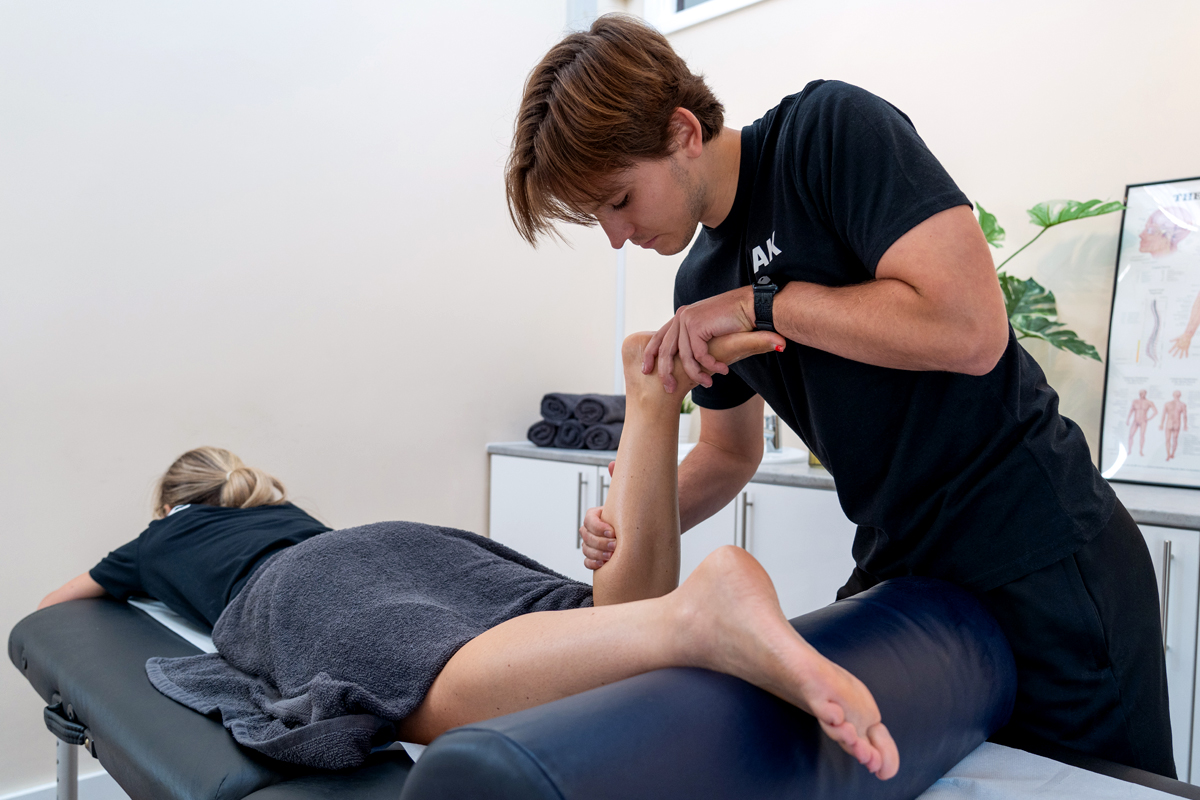
Today, sports massage therapy is part of the mainstream, playing an important role in the rehabilitation of injuries and aiding recovery from all types of physical training. For anyone undertaking strength training, sports massage therapy is a great tool to negate the effects of DOMS (Delayed Onset Muscle Soreness). Here at Body Mentors, we’re able to offer sports massage therapy as an additional service in our on-site injury clinic.

How does sports massage work?

Strength training causes damage to your muscles, which your body responds to with adaptation and growth. It’s this breakdown of muscle fibres which causes DOMS. By introducing sports massage therapy after your workouts, we can help aid this process.

Sports massage therapy creates and releases pressure in the congested areas, which improves blood circulation — bringing oxygen rich blood, and improving the repair process. This can lead to faster recovery times, less soreness after a workout, and even improve the overall health of the muscles. Sports massage can also help to reduce tightness within a muscle, by applying pressure to specific points it can help to break down adhesions (knots).

A study back in 2015 looked at the effect of sports massage alongside resistance training. A group of 29 women were observed, with 15 of the group having a sports massage after training, whilst the remaining 14 didn’t. When surveyed about their muscle soreness on the following days, those who had sports massage recorded significantly lower scores than the participants who didn’t. The study also recorded vertical jump tests, illustrating that the sports massage group performed better. The study concluded that sports massages aided with a faster recovery and improved muscle efficiency post-exercise.

You can read the full study in the Human Movement journal by clicking here.


If you would like to book a sports massage, please click the button below.

Book a Sports Massage

Alex Kerslake

Post By

Alex Kerslake

I’ve spent the past decade in a gym environment, learning a variety of training approaches and methods. From beginners in their first lifting session, getting to grips with the fundamentals – through to professional athletes, such as England Rugby players, training at a very high level.
Other posts you might like

Beats & Barbells – Can Music Affect Strength Training?

Music is a widely used tool within the gym, from background music to playing through peoples headphones. It has repeatedly been shown to have ergogenic benefits during multiple forms of exercise, from endurance events, sprinting and even resistance training. This is done as a resource to potentially boost motivation and increase exercise performance.

Read Post

What Your Squat Says About Your Femurs

The low bar back squat is the backbone of Body Mentors strength training programmes. This is because it allows us to incorporate the largest amount of muscle mass, having the longest effective range of motion and enabling us to lift the most weight. However, no two people's squats look the same and there are many reasons for this, one of the main reasons being a person's femur length.

Read Post

Understanding the Stress-Recovery-Adaptation Cycle

The stress recovery and adaptation cycle describes how the body responds to a stimulus such as resistance training which allows you to become stronger. This cycle is fundamental to training and development. With each step being as important as the other, let's look at each stage in more detail.

Read Post